A Beginner’s Guide to Esperanto
We hope you’ve enjoyed our Esperanto week! If we’ve convinced you to give the language a try, our handy beginner’s guide is a good place to start. Make sure to share it with anyone you think might be interested, too!
Of course, you can start learning Esperanto with the uTalk app, too! All the words and phrases on the infographic below are featured on the app, along with recordings of authentic human speakers of the language.
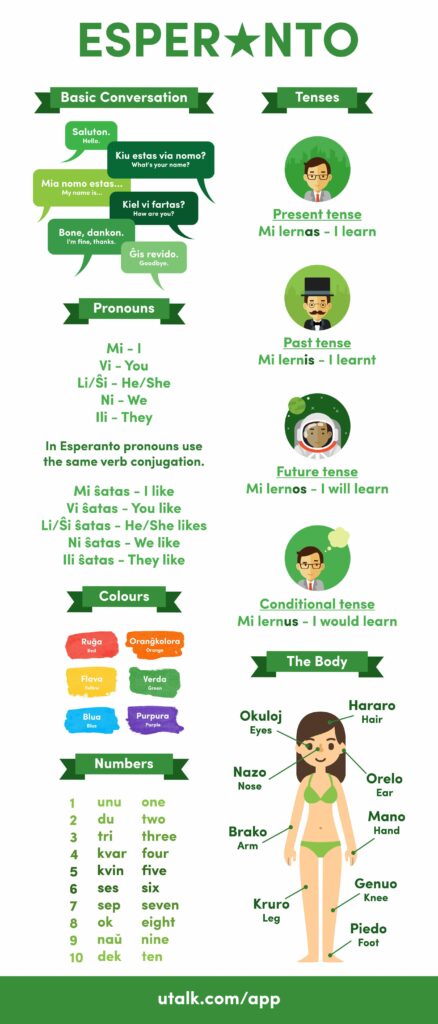
Following a request, this guide is now also available in Spanish.
For even more information about Esperanto, visit edukado.net, a site run by linguist Katalin Kováts, who worked with us on the translation and recording of uTalk Esperanto. Or, check out our other posts about Esperanto here on our blog!
Learn a language with uTalk
Ready to learn Esperanto?
Learn useful words and phrases, listen to native speakers and build confidence through fun, interactive games.