
Headline Stats: Quick Answers
- Mandarin Chinese is the most spoken native language in the world, with around 930 million first-language speakers.
- English is the most spoken language overall, with around 1.45 billion total speakers.
- Spanish is spoken by around 559 million people worldwide, including native speakers in Spain and across Latin America, and second-language speakers around the globe.
- French has around 300 million speakers worldwide, across 29 countries. While only about 80–85 million people speak it natively, it is widely learned and used as a second language, especially in Africa and Europe.
- Swahili is the most widely spoken language in East Africa with around 16 million native speakers, and up to 250 million total speakers. Arabic dominates North Africa and the Middle East with 370 million native speakers, and over 400 million speakers including those who use it as a second language.
- English is widely recognised as the language of global business and diplomacy, used in international trade, aviation, and science.
On the internet, English dominates too, making up around 59% of website content.
Global Language Statistics: The Big Picture
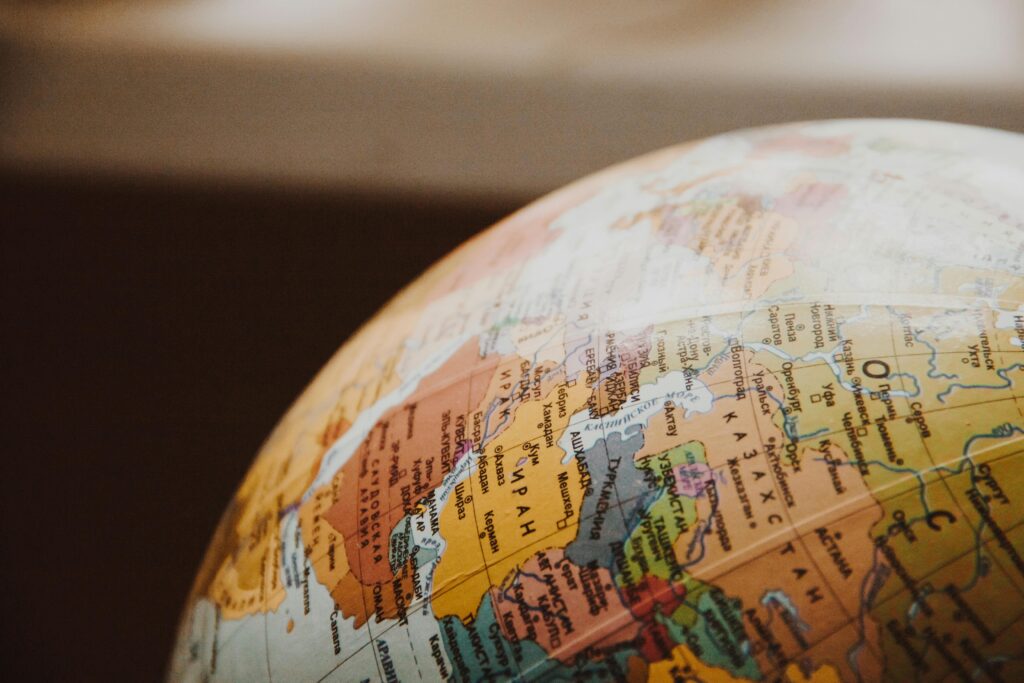
The first signs of a shared human language go back tens of thousands of years. Since then, over 7,000 languages have developed worldwide. Some are spoken only within a single community, while others have spread so widely that they are used daily across whole continents.
Today, it is suggested that more than half of the world’s population is multilingual, meaning they speak at least two languages.
Here are the top languages by both native and total speakers:
Top Languages by Native Speakers (L1)
| Rank | Language | Native Speakers (millions) |
| 1 | Mandarin Chinese | ~930 |
| 2 | Spanish | ~485 |
| 3 | English | ~380 |
| 4 | Arabic (all varieties) | ~370 |
| 5 | Hindi | ~345 |
| 6 | Portuguese | ~230 |
| 7 | Russian | ~150 |
| 8 | Japanese | ~125 |
| 9 | German | ~95 |
| 10 | French | ~80–85 |
Top Languages by Total Speakers (L1 + L2)
| Rank | Language | Total Speakers (millions) |
| 1 | English | ~1,450 |
| 2 | Mandarin Chinese | ~1,100 |
| 3 | Hindi | ~600 |
| 4 | Spanish | ~559 |
| 5 | Arabic (all varieties) | ~400+ |
| 6 | French | ~300 |
| 7 | Russian | ~260 |
| 8 | Portuguese | ~258 |
| 9 | Bengali | ~250 |
| 10 | German | ~135 |
How Many People Speak…?
Languages vary enormously in reach. Some are spoken natively by hundreds of millions of people, while others rely on second-language learners to spread globally. Below we take a closer look at some of the world’s most spoken and most studied languages.
English
380 million native speakers and around 1.07 billion non-native speakers, making it the most studied foreign language worldwide.
Spanish
485 million native speakers and 559 million total. While it dominates Spain and Latin America, the United States is also a major centre of growth, with over 40 million native speakers and around 55 million total speakers, more than in Spain itself.
French
French has around 85 million native speakers and over 300 million speakers. Its global footprint comes from history and diplomacy, and from rapid population growth in French-speaking nations across West and Central Africa.
German
95 million native speakers, 135 million total. Important for European trade, especially car manufacturing and engineering and a leading language in research and higher education.
Russian
150 million native speakers, 260 million total. Influential across Eastern Europe and Central Asia.
Arabic
370 million native speakers, 400 million total. It exists in many spoken forms, with dialects varying widely across the Middle East and North Africa, alongside Modern Standard Arabic used in media and formal settings.
Hindi
345 million native speakers, 600 million total. One of India’s most widely spoken languages.
Mandarin Chinese
930 million native speakers, 1.1 billion total. The most spoken native language on earth.
Portuguese
230 million native speakers, 258 million total with the highest number of speakers found in Brazil.
Italian
65 million native speakers, 67 million total. Popular for cultural reasons, from art to cuisine.
Welsh
Around 538,000 speakers in Wales (17.8% of the population). Once in steep decline, Welsh is now reviving thanks to education and media, with a government target of 1 million speakers by 2050.
Irish (Gaeilge)
Around 1.9 million people in Ireland say they can speak Irish, though only about 74,000 use it daily. Its survival is supported by Gaeltacht communities, schools and national cultural policy.
Latin
Once the language of the Roman Empire, Latin is now a “dead” language with no native speakers. It remains influential in science, law, medicine and the Catholic Church, and is studied by many as a classical language.
Hawaiian
Once nearly extinct, Hawaiian now has around 27,000 people who speak it at home, boosted by immersion schools and cultural revival since the 1980s. Including learners and second-language speakers, over 50,000 people have some ability in Hawaiian. It is an official language of Hawai‘i alongside English.
The Most Spoken Languages by Continent
The Most Popular Spoken Languages in Africa
Over 2,000 languages are spoken across Africa, making it one of the most linguistically diverse regions in the world. Many are tribal or community languages, used within families and villages for daily life. Alongside them, larger regional and official languages such as Arabic, Swahili, Hausa, Yoruba and Zulu act as bridges between groups and nations. European colonial history also left a strong imprint, with English, French and Portuguese serving as official languages in many countries.
Arabic is the most popular language both natively and when native and second language speakers are considered. Swahili, as a key bridging language (lingua franca) across East and Central Africa has a low number of native speakers but climbs the list when second languages are considered, reflecting its role in communication across the continent.
Top 12 African Languages by Native Speakers (L1)
| Rank | Language | Native Speakers | Where Spoken |
| 1 | Arabic | ~200 million | Egypt, Algeria, Morocco, Sudan, Tunisia, Libya, Mauritania |
| 2 | Hausa | ~80 million | Nigeria, Niger, Ghana, Cameroon, Chad |
| 3 | Yoruba | ~45 million | Nigeria, Benin |
| 4 | Igbo | ~44 million | Nigeria |
| 5 | Oromo | ~40 million | Ethiopia, Kenya |
| 6 | Amharic | ~30 million | Ethiopia |
| 7 | Swahili | ~16 million | Tanzania, Kenya, DRC, Uganda |
| 8 | Somali | ~16 million | Somalia, Djibouti, Ethiopia, Kenya |
| 9 | Shona | ~14 million | Zimbabwe |
| 10 | Zulu | ~12 million | South Africa |
| 11 | Xhosa | ~10 million | South Africa |
| 12 | Malagasy | ~8 million | Madagascar |
The Most Popular Spoken Languages in Europe
Europe is home to more than 200 languages, but only a handful dominate across the continent. Russian has the most native speakers, while English is the most widely understood thanks to its role in business, education, and international communication. Other major languages include German, French, Italian, and Spanish, each central to regional culture and influence.
Europe is also notable for its multilingual countries. Luxembourg, with just 650,000 people, has three official languages – Luxembourgish, French, and German, while Switzerland recognises four: German, French, Italian, and Romansh. Across the European Union, 24 official languages are recognised, reflecting the continent’s remarkable diversity.
Top 12 European Languages by Native Speakers (L1)
| Rank | Language | Native Speakers | Where Spoken |
| 1 | Russian | ~120 million (in Europe) | Russia, Ukraine, Belarus, Baltics |
| 2 | German | ~95 million | Germany, Austria, Switzerland, Belgium |
| 3 | French | ~80 million | France, Belgium, Switzerland, Luxembourg |
| 4 | English | ~70 million | United Kingdom, Ireland |
| 5 | Italian | ~60 million | Italy, Switzerland |
| 6 | Spanish | ~43 million | Spain |
| 7 | Polish | ~38 million | Poland |
| 8 | Ukrainian | ~32 million | Ukraine |
| 9 | Romanian | ~24 million | Romania, Moldova |
| 10 | Dutch | ~16.5 million | Netherlands, Belgium |
| 11 | Turkish | ~12 million | Turkey (European region), Cyprus, diaspora |
| 12 | Portuguese | ~10 million | Portugal |
The Most Popular Spoken Languages in Asia
Asia is the world’s largest and most linguistically diverse continent, home to more than 4.7 billion people and over 2,300 languages. From Mandarin Chinese to Hindi, Bengali, and Arabic, Asia’s languages reflect vast histories, empires, and migration patterns. Some, like Japanese or Korean, are spoken almost exclusively within one country, while others such as Arabic, Hindi, and Malay extend across borders and cultures.
Top 12 Asian Languages by Native Speakers (L1)
| Rank | Language | Native Speakers | Where Spoken |
| 1 | Mandarin Chinese | ~930 million | China, Taiwan, Singapore |
| 2 | Hindi | ~345 million | India, Nepal |
| 3 | Bengali | ~230 million | Bangladesh, India |
| 4 | Arabic (Asian varieties) | ~170 million | Saudi Arabia, Iraq, Syria, Yemen, Jordan |
| 5 | Japanese | ~125 million | Japan |
| 6 | Punjabi | ~95 million | India, Pakistan |
| 7 | Vietnamese | ~86 million | Vietnam |
| 8 | Telugu | ~83 million | India |
| 9 | Korean | ~80 million | North & South Korea |
| 10 | Tamil | ~75 million | India, Sri Lanka, Singapore. Malaysia |
| 11 | Turkish | ~75 million | Turkey (Asian part), Cyprus |
| 12 | Persian (Farsi, Dari, Tajik) | ~70 million | Iran, Afghanistan, Tajikistan |
The Most Popular Spoken Languages in The Americas
The Americas are home to more than 1,000 languages, from global giants like English, Spanish, and Portuguese to hundreds of indigenous languages spoken by smaller communities. Colonial history shaped the region: Spanish dominates most of Latin America, Portuguese is spoken in Brazil, and English is the main language in the United States, Canada, and parts of the Caribbean.Indigenous languages such as Quechua, Guaraní, and Nahuatl continue to thrive in many regions, preserving deep cultural and historical roots alongside the continent’s dominant colonial languages.
Top 12 Languages in the Americas by Native Speakers (L1)
| Rank | Language | Native Speakers | Where Spoken |
| 1 | Spanish | ~450 million | Mexico, Central & South America, USA |
| 2 | English | ~335 million | United States, Canada, Caribbean nations |
| 3 | Portuguese | ~220 million | Brazil |
| 4 | French | ~18 million | Canada, Haiti, French Guiana, Caribbean |
| 5 | Quechua | ~8 million | Peru, Bolivia, Ecuador, Colombia |
| 6 | Guaraní | ~6 million | Paraguay, Bolivia, Argentina, Brazil |
| 7 | Haitian Creole | ~11 million | Haiti |
| 8 | Aymara | ~2 million | Bolivia, Peru, Chile |
| 9 | Navajo | ~170,000 | United States (Southwest) |
| 10 | K’iche’ (Quiché) | ~1 million | Guatemala |
| 11 | Nahuatl | ~1.7 million | Mexico |
| 12 | Mapudungun | ~260,000 | Chile, Argentina |
The Most Popular Spoken Languages in Oceania
Oceania, stretching from Australia and New Zealand to the Pacific Islands, is home to more than 1,300 languages, one of the highest linguistic densities in the world. While English dominates as the main language of communication across Australia, New Zealand, and many Pacific nations, indigenous and creole languages remain central to the region’s identity.Papua New Guinea alone is home to over 840 languages, representing about 12% of all the world’s living tongues. Across the Pacific, languages like Fijian, Samoan, Tongan, and Hawaiian remain vibrant symbols of cultural heritage and resilience.
Top 12 Languages in Oceania by Native Speakers (L1)
| Rank | Language | Native Speakers | Where Spoken |
| 1 | English | ~22 million | Australia, New Zealand, Pacific Islands |
| 2 | Tok Pisin | ~4 million | Papua New Guinea |
| 3 | Fijian | ~370,000 | Fiji |
| 4 | Samoan | ~260,000 | Samoa, American Samoa, New Zealand |
| 5 | Tongan | ~190,000 | Tonga, New Zealand |
| 6 | Māori | ~185,000 | New Zealand |
| 7 | Tahitian | ~68,000 | French Polynesia |
| 8 | Hawaiian | ~27,000 | Hawai’i (United States) |
| 9 | Bislama | ~10,000 | Vanuatu |
| 10 | Hiri Motu | ~10,000 | Papua New Guinea |
| 11 | Niuean | ~8,000 | Niue, New Zealand |
| 12 | Pitjantjatjara | ~3,000 | Central Australia (Aboriginal communities) |

Unusual and Least Spoken Languages
While a handful of global languages dominate, thousands more are at risk of disappearing. UNESCO estimates that over 40% of the world’s languages are endangered, with some spoken by only a few dozen people.
Examples include Ainu in Japan, Livonian in Latvia, and Cornish in the UK, which almost died out but is now being revived through education. Manx, from the Isle of Man, was declared extinct in 1974 when its last native speaker died, yet today it is being spoken again by a growing number of learners.
Some languages have no native speakers but continue to play important cultural or religious roles. Latin, Sanskrit and Coptic are used in rituals, study or liturgy, while Hebrew is the best-known revival success story, returning from centuries without native speakers to become the national language of Israel.
uTalk supports not only the global giants like English, Spanish and Mandarin, but also the rare gems, helping to keep all the languages of the world alive.
What Is the Most Common Language to Learn?
When it comes to language learning, English leads by far, with an estimated 1.5 billion learners worldwide. For many learners, improving their language proficiency in English is seen as essential for global careers.