
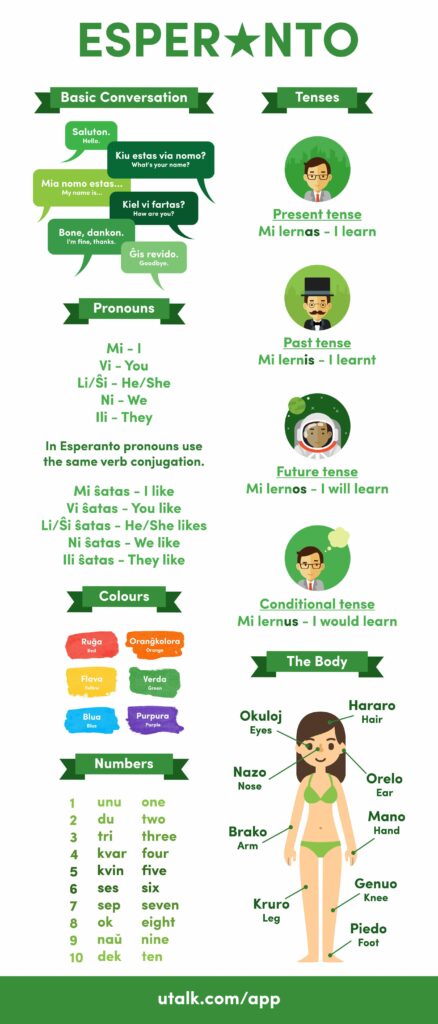
We hope you’ve enjoyed our Esperanto week! If we’ve convinced you to give the language a try, our handy beginner’s guide is a good place to start. Make sure to share it with anyone you think might be interested, too!
Of course, you can start learning Esperanto with the uTalk app, too! All the words and phrases on the infographic below are featured on the app, along with recordings of authentic human speakers of the language.
Following a request, this guide is now also available in Spanish.
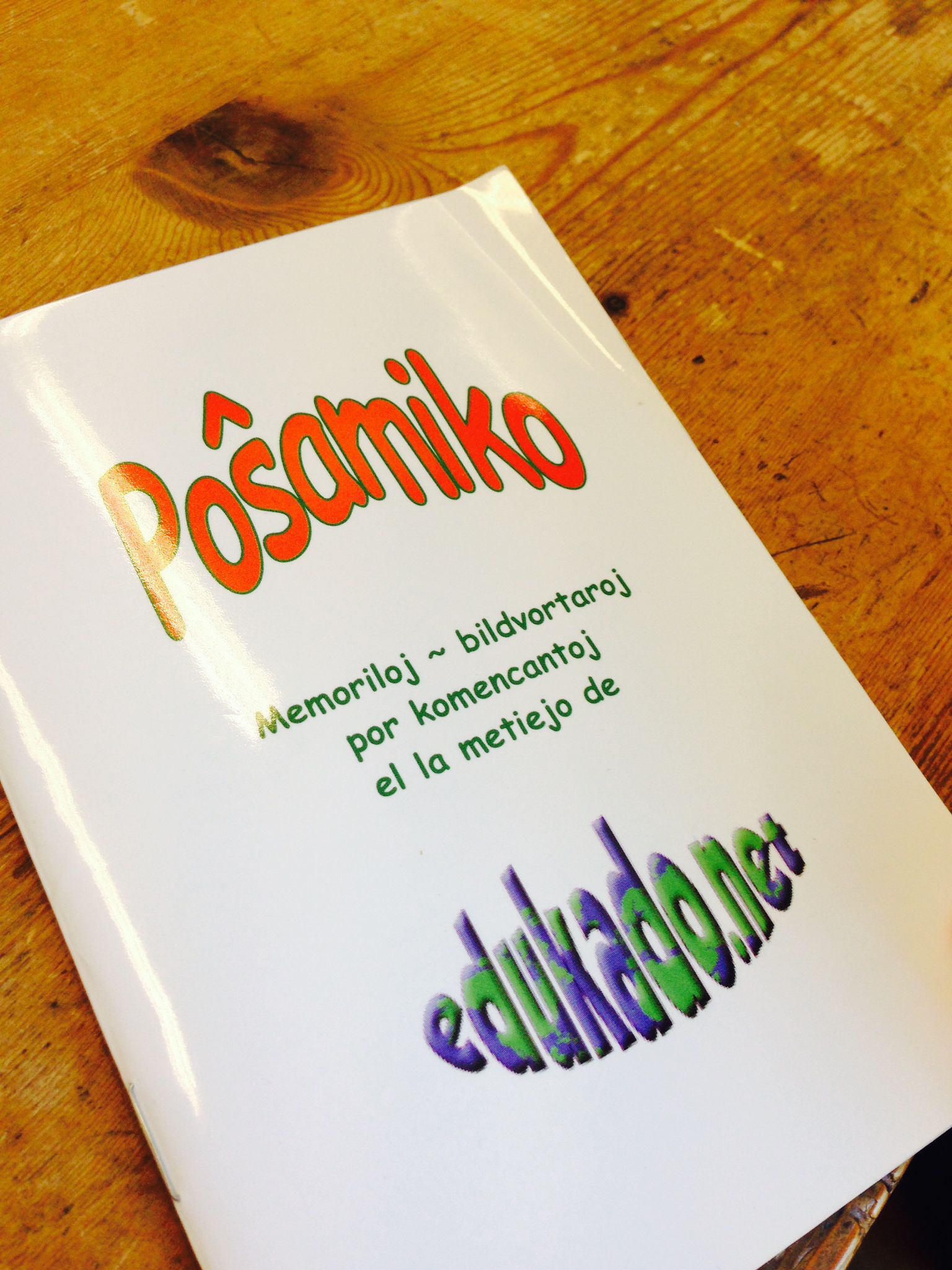
For even more information about Esperanto, visit edukado.net, a site run by linguist Katalin Kováts, who worked with us on the translation and recording of uTalk Esperanto. Or, check out our other posts about Esperanto here on our blog!
I like the illustrations. One small point; “learnus” should be “lernus”.
Thanks Bill, we were just testing you! 😉 This is going to be fixed any minute now…
Hello again Bill, just to let you know the mistake has been fixed. Thanks again!
Elkoran dankon pro tiu bela alrigardo al iuj komencaj scioj pri Esperanto! Je la risko de pedantemo, purpura ne estas ‘violet.’ La vorto ‘violkolora’ bone priskribas la koloron en la bildo. Purpura pli ruĝas ol violkolora, (kaj do ol la koloro en la bildo.) Iom konfuzige, la vorto ‘purpura’ en Esperanto vere ne priskribas la saman koloron kiom ‘purple’ en la Usonangla.
Feliĉe por komencantoj, la vorto ‘violkolora’ estas bela gloso por violet, kiam temas pri tia bildinstruilo kiel tia.
Krome, “Kiel vi nomiĝas?” kaj “Kio estas via nomo?” estas du pli oftaj manieroj peti ies nomon ol “Kiu estas via nomo,” aparte se ne temas pri provi trovi iun sur listo da aliĝintoj je komenco da esperanta-aranĝo aŭ io… 😉
Thanks so much for this beautiful look at some basic facts about Esperanto! At the risk of sounding pedantic, ‘purpura’ isn’t violet. The word ‘violkolora’ describes the color in the picture well. ‘Purpura’ is redder than ‘violkolora,’ (and therefore redder than the color in the picture.) Somewhat confusingly, the word ‘purpura’ in Esperanto doesn’t really describe the same color as the word ‘purple’ does in American English.
Luckily for beginners, the word ‘violkolora’ is a beautiful gloss for ‘violet’ when it comes to a teaching-picture like this.
Also, “How are you called?” and “What is your name?” are two more commonly used ways to ask someone their name than “Which is your name?”, unless you are trying to look that person up on a list of registered participants at the beginning of an esperanto-event or something… 😉
Thanks for the great teaching-picture!
Hello Ĵenja, thanks for your feedback and we’re glad you like the guide!
Regarding violet and purple, you’re absolutely right, and we’re getting this changed right now.
‘Kiu estas via nomo?’ is a more complicated question. We did discuss this with both our independent translators at the time, and they felt this was the best translation of the phrase – although ‘Kio’ is also perfectly valid (as, we understand, is ‘Kiel vi nomiĝas?’). There are discussions on this question at
http://edukado.net/komunumo/forumo?f=555&p=1
We hope this helps to explain our decision, and thanks again for your comment!
I couldn’t find an example of “Kiu estas via nomo” in the lessons at Edukado.net. Nor in PIV, nor the Reta Vortaro, nor La Tekstaro de Esperanto. Are there references to this usage?
I did find “violkolora” in Edukado.net’s “Koloroj- Korektita”.
Hello, we discussed this question with our two independent translators at the time of making the uTalk app, and both felt that ‘Kiu estas via nomo’ was the most appropriate translation of this phrase, although we understand that ‘Kio’ is also perfectly valid, as is ‘Kiel vi nomiĝas’. There are discussions on this subject at
http://edukado.net/komunumo/forumo?f=555&p=1
We hope this helps and thanks for your comment.
One more – the phrase also appears in this book, which was published by edukado.net: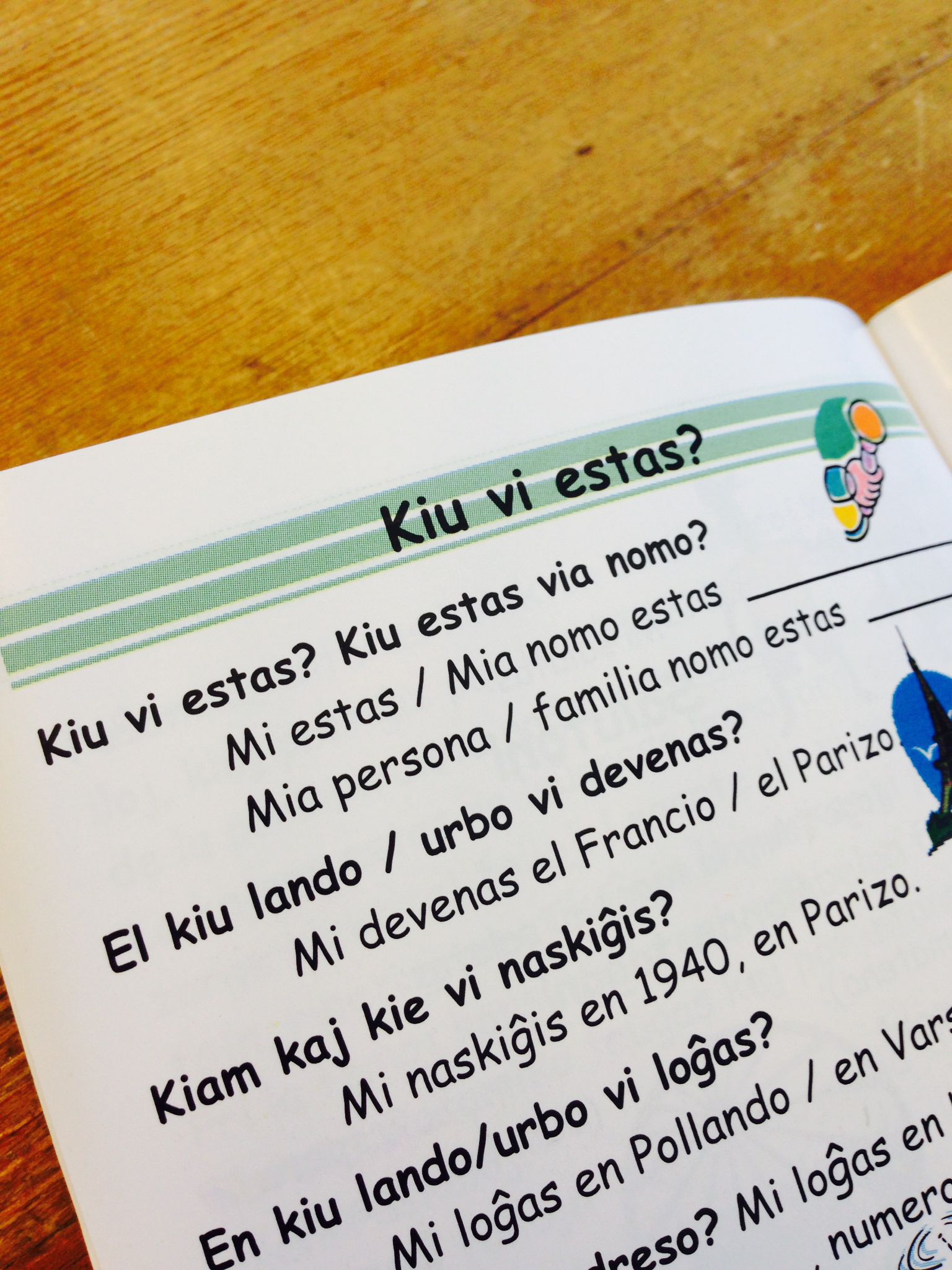
I notice that we have four pictures of a male person on this page. An astronaut, and, at a guess, a business man, a professor, and a politician.
We have one picture of a woman, portraying a nearly nude collection of body parts. I marvel that this sort of sexism continues in 2015.
Hello Vere, thanks for your comment. The four male characters are supposed to be the same person in different tenses, so the graphic actually shows one man and one woman. We apologise for any offence caused by the images used; this certainly wasn’t our intention.